International Training on Statistical Analysis for Environmental Science
BackgroundObjectivesWhat You Will LearnModulesParticipantsContactCourse Background
Environmental science is inherently data-driven. Assessing pollution, modeling climate change, tracking species, or evaluating conservation policies all require sound statistical analysis. The variability and complexity of environmental data present unique challenges for researchers and practitioners.
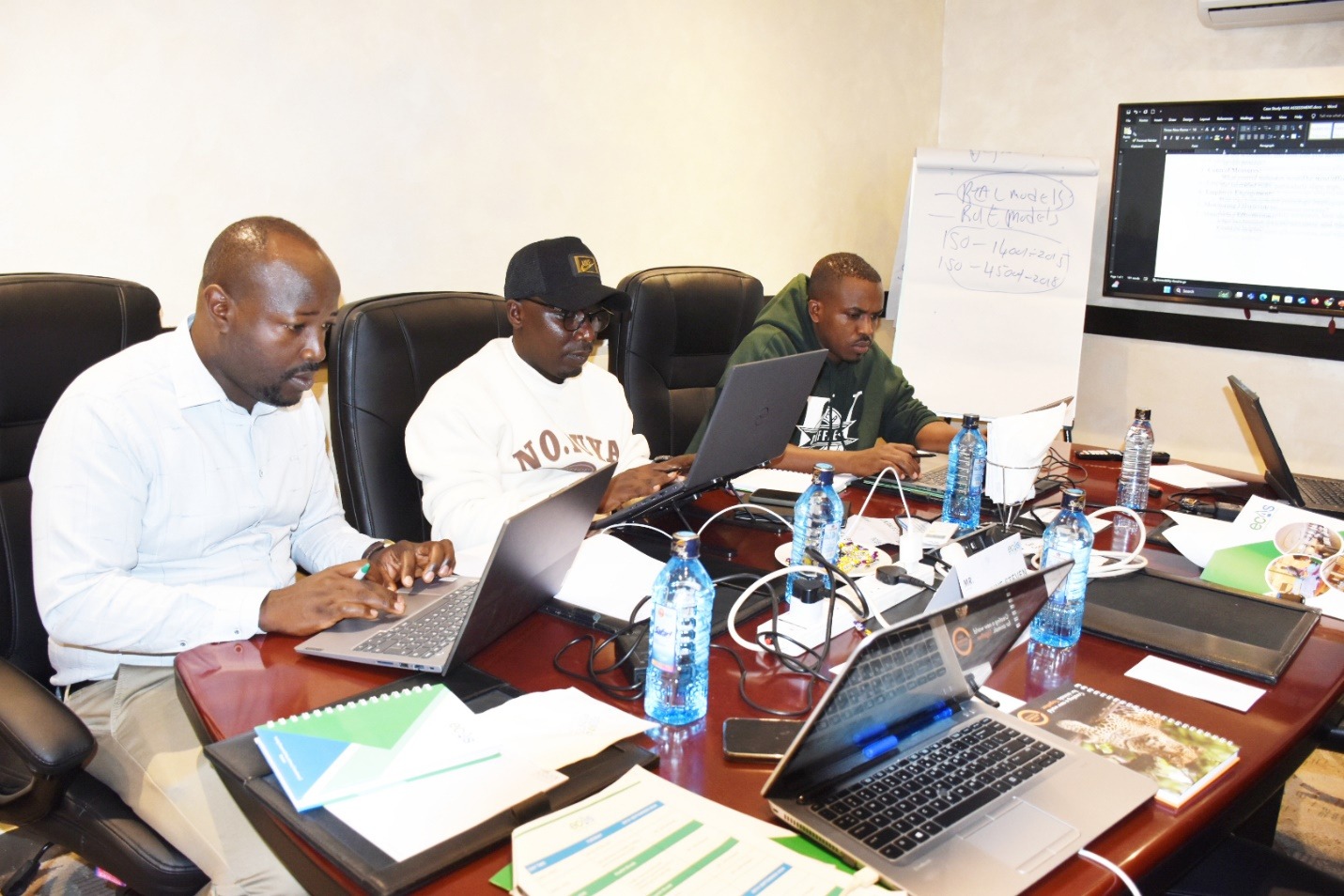
ECAS Institute offers this course to equip professionals with essential statistical knowledge and practical skills. Participants will learn to select appropriate statistical tests, interpret results, and use modern statistical software for defensible conclusions.
Course Objectives
Distinguish different types of environmental data and apply descriptive statistics.Formulate and test statistical hypotheses for environmental research.Conduct t-tests and ANOVA to compare groups.Perform linear and multiple regression analyses.Apply time series and spatial analysis to identify trends and patterns.Use statistical software (R, Python) for analysis and visualization.Interpret and present statistical results clearly and scientifically.What You Will Learn
Fundamentals of statistical thinking for environmental decision-making.Organize, summarize, and visualize environmental data.Conduct inferential statistical tests for means, proportions, and distributions.Build and interpret regression models for environmental variables.Analyze temporal and spatial data to identify trends and geographic patterns.Select correct statistical methods for research questions and datasets.Apply statistical software to execute analyses and visualize results.Communicate statistical results effectively in reports, papers, and presentations.Target Participants
This course is ideal for professionals and researchers handling environmental data:
Environmental scientists, ecologists, and conservation biologistsEnvironmental consultantsGovernment regulators and policy analystsHydrologists and atmospheric scientistsPublic health professionals dealing with environmental exposuresGraduate students and researchers in environmental scienceData analysts transitioning to environmental rolesTraining Modules
| No | Module | Details |
|---|
| 1 | Statistical Foundations and Data Types | Introduction to statistics, populations vs samples, data types, probability and distributions. |
| 2 | Descriptive Statistics and Data Visualization | Measures of central tendency and dispersion, graphical displays, summary statistics. |
| 3 | Hypothesis Testing and Inferential Statistics | Null/alternative hypotheses, p-values, confidence intervals, t-tests, ANOVA. |
| 4 | Regression Analysis | Simple and multiple linear regression, model assumptions, interpretation of coefficients. |
| 5 | Analysis of Time Series and Spatial Data | Time series decomposition, smoothing, spatial data analysis, mapping and visualization. |
| 6 | Introduction to Advanced Statistical Methods | Multivariate analysis, PCA, non-parametric tests, generalized linear models (GLMs). |
| 7 | Statistical Software for Environmental Data | Hands-on use of R or Python: data import, manipulation, tests, modeling, visualization. |
Contact & Registration
For tailor-made courses or registration inquiries, contact us at: info@ecasiafrica.org
Payment should be made to our bank account before the training start date, with proof of payment sent to the same email.
About ECAS Institute
ECAS Institute delivers independent training, research, and consulting services focusing on climate change, renewable energy, biodiversity conservation, agriculture, and food systems. Based in Nairobi, Kenya, ECAS operates across Africa and globally, partnering with organizations from the UK, Denmark, Italy, Sweden, Germany, and the USA.