International Training on Introduction to Academic and Development Research for Climate Change, Energy and Sustainable Development
Background
The urgency of climate change, energy transitions, and sustainable development requires professionals to have strong research skills. Evidence-based policies and solutions depend on rigorous academic and development research. Many professionals struggle with designing, conducting, and applying research effectively in sustainability sciences.
This course by ECAS Institute bridges theoretical research and practical, development-oriented studies. Participants gain critical skills in research design, data collection, analysis, and policy engagement specifically tailored for climate, energy, and sustainability fields.
The course emphasizes how research informs policy, drives technological innovations, and contributes to socio-economic transformations. Participants learn to translate research findings into actionable solutions for governments, NGOs, businesses, and international organizations.
By the end of the course, participants will be equipped to design research projects, conduct fieldwork, analyze data, communicate findings effectively, and contribute to sustainable development globally.
Objectives of the Training
Understand fundamentals of academic and development research in climate, energy, and sustainability.Apply qualitative, quantitative, and mixed-method research approaches.Develop research proposals and frameworks for sustainability studies.Utilize data collection tools: surveys, interviews, remote sensing, GIS, and big data analytics.Apply statistical and analytical methods to interpret results.Assess policy relevance and impact pathways of research.Explore funding opportunities and ethical considerations in research.Communicate findings through reports, policy briefs, and publications.Engage stakeholders and policymakers for knowledge transfer.Conduct impact assessments and monitoring evaluations for sustainability projects.What You Will Learn
Principles of academic and development research in sustainability sciences.Research methodologies and frameworks for environmental and social studies.Designing and conducting research, including hypothesis formulation and sampling.Data collection techniques: surveys, focus groups, GIS mapping, big data applications.Analytical software: SPSS, R, STATA for quantitative analysis; thematic analysis for qualitative data.Strategies for effective communication of research findings to diverse audiences.Ethical research practices and responsible data management.Role of research in policy development and decision-making.Impact assessment and evaluation methods for sustainability initiatives.Practical application of skills through case studies and a capstone project.Target Participants
This course is ideal for early-career researchers, postgraduate students, development practitioners, policy analysts, and professionals in climate change, energy, and sustainability. It benefits NGO representatives, consultants, and government officials seeking to apply research methodologies to sustainability and development projects.
Training Modules
| No | Module | Details |
|---|
| 1 | Fundamentals of Academic and Development Research | Introduction to research in sustainability sciences; differences between academic and development research; research paradigms; interdisciplinary approaches; role in policy. |
| 2 | Research Design and Methodologies | Defining research problems; formulating objectives and hypotheses; qualitative, quantitative, mixed-method approaches; experimental vs. observational research; proposal structure. |
| 3 | Data Collection Techniques | Primary vs. secondary data; surveys, interviews, focus groups; remote sensing, GIS, big data; participatory and community-based approaches; ethical fieldwork. |
| 4 | Data Analysis and Interpretation | Descriptive and inferential statistics; using SPSS, R, STATA; thematic/content analysis; data visualization; interpreting results and drawing conclusions. |
| 5 | Research Ethics and Governance | Research integrity; informed consent; ethical approvals; data privacy and security; institutional review boards; addressing bias and conflicts of interest. |
| 6 | Policy Engagement and Knowledge Translation | Bridging research and decision-making; policy briefs and reports; stakeholder engagement; advocacy, lobbying, partnerships; media and public outreach. |
| 7 | Impact Assessment and Monitoring | Impact assessment frameworks; KPIs for sustainability programs; monitoring and evaluation tools; social, environmental, economic impact assessments; case studies. |
| 8 | Writing and Publishing Research | Academic papers, technical reports, policy documents; writing for different audiences; peer review and journal selection; funding proposals; presenting research at forums. |
| 9 | Practical Applications and Capstone Project | Designing and conducting small-scale research projects; applying methodologies; developing research proposals or action plans; presenting findings; final assessment and reflection. |
Training Style
The course uses a practical, hands-on approach with lectures, interactive workshops, case studies, group discussions, and peer reviews. Participants engage in simulations, statistical exercises, and proposal writing. Guest lectures provide insights into research’s role in sustainability governance. The course concludes with a capstone project to apply learning in real-world scenarios.
General Notes
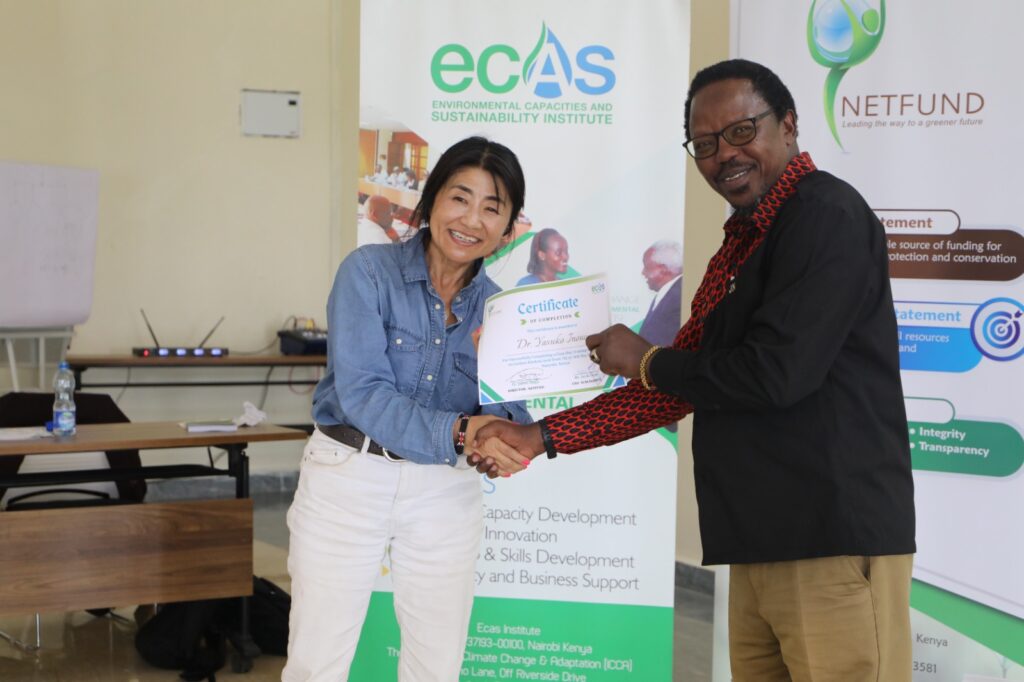
Training manuals and reference materials provided.Certificate issued upon successful completion.Tailor-made courses available: info@ecasiafrica.org.Payment before training; proof sent to info@ecasiafrica.org.Develop your research skills for climate change, energy, and sustainable development projects.
Contact ECAS Institute | info@ecasiafrica.org
About ECAS Institute
ECAS Institute provides training, research, and consulting in climate change, resilience, carbon markets, renewable energy, nature-based solutions, biodiversity, agriculture, and food systems. Based in Nairobi, Kenya, ECAS operates across Africa and globally with partners from the UK, Denmark, Italy, Sweden, Germany, and the USA.