International Training on Environmental Regulations (Assessments & Audits)
Course Background
Environmental regulations are a cornerstone of sustainable development, ensuring industrial, commercial, and governmental activities comply with environmental laws, sustainability policies, and global climate commitments. As climate change, pollution, and resource depletion intensify, organizations must integrate environmental impact assessments (EIA) and environmental audits (EA) into their operations.
This course from ECAS Institute provides professionals with the knowledge and tools to navigate complex regulatory landscapes, conduct effective assessments, and implement sustainable practices aligned with national and international standards. Participants will learn legal frameworks, EIA and EA methodologies, compliance monitoring, risk management, and corporate sustainability strategies.
Course Objectives
Understand environmental laws, policies, and compliance requirements at national and international levels.Conduct Environmental Impact Assessments (EIA) to evaluate potential environmental risks.Perform Environmental Audits (EA) to monitor and improve sustainability practices.Identify key environmental risks and develop mitigation strategies.Assess corporate environmental responsibility and governance in regulatory compliance.Understand industry-specific environmental standards and enforcement mechanisms.Integrate sustainability and climate policies into environmental regulations.What You Will Learn
Introduction to Environmental Regulations – laws, policies, and global frameworks.Environmental Impact Assessment (EIA) – principles, processes, and methodologies.Environmental Audits (EA) – purpose, procedures, and best practices.Regulatory Compliance and Enforcement – monitoring, reporting, and penalties.Environmental Risk Assessment and Mitigation – identifying hazards and developing solutions.Corporate Environmental Responsibility – sustainable practices in organizations.Emerging Trends and Innovations – digital tools, climate adaptation, and green policies.Target Participants
This course is ideal for environmental professionals, policymakers, regulators, corporate sustainability officers, and industry practitioners. It also benefits government agencies, consultants, researchers, legal professionals, business executives, students, NGOs, and community leaders seeking practical skills in environmental compliance, assessment, and auditing.
Training Modules
Overview of Environmental Regulations
Global and National Frameworks – Paris Agreement, Kyoto Protocol, SDGs.Institutional Roles – governments, environmental agencies, international organizations.Sector-Specific Regulations – energy, manufacturing, agriculture compliance.Legal & Policy Enforcement – fines, penalties, and incentives.Environmental Impact Assessment (EIA)
Introduction – purpose, legal basis, applications across industries.Process & Methodologies – screening, scoping, baseline studies, mitigation planning.Public Participation – stakeholder engagement in EIA.Case Studies – real-world examples in energy, mining, and infrastructure.Environmental Audits (EA) & Compliance Monitoring
Types of Audits – compliance, performance, and due diligence audits.Audit Methodologies – data collection, impact assessment, reporting.Audit Reports – key components, compliance reviews, recommendations.Case Studies – audit reports across various industries.Regulatory Compliance and Enforcement
Compliance Strategies – meeting regulatory standards.Monitoring & Enforcement – inspections, reporting, and enforcement measures.Consequences of Non-Compliance – legal, financial, and reputational risks.Role of Regulatory Bodies – government and NGO functions.Environmental Risk Assessment and Mitigation
Risk Identification – pollution, habitat destruction, resource depletion.Risk Frameworks – hazard identification, exposure analysis, risk characterization.Mitigation Strategies – pollution control, sustainable resource use, ecosystem restoration.Technology in Risk Management – digital tools, remote sensing, monitoring systems.Corporate Environmental Responsibility and Sustainability
Environmental Management Systems (EMS) – ISO 14001, corporate sustainability best practices.Sustainable Business Strategies – circular economy, green finance, low-carbon technologies.Corporate Social Responsibility (CSR) – business ethics, community engagement, transparent reporting.Emerging Trends – renewable energy, carbon neutrality, climate resilience innovations.Training Style
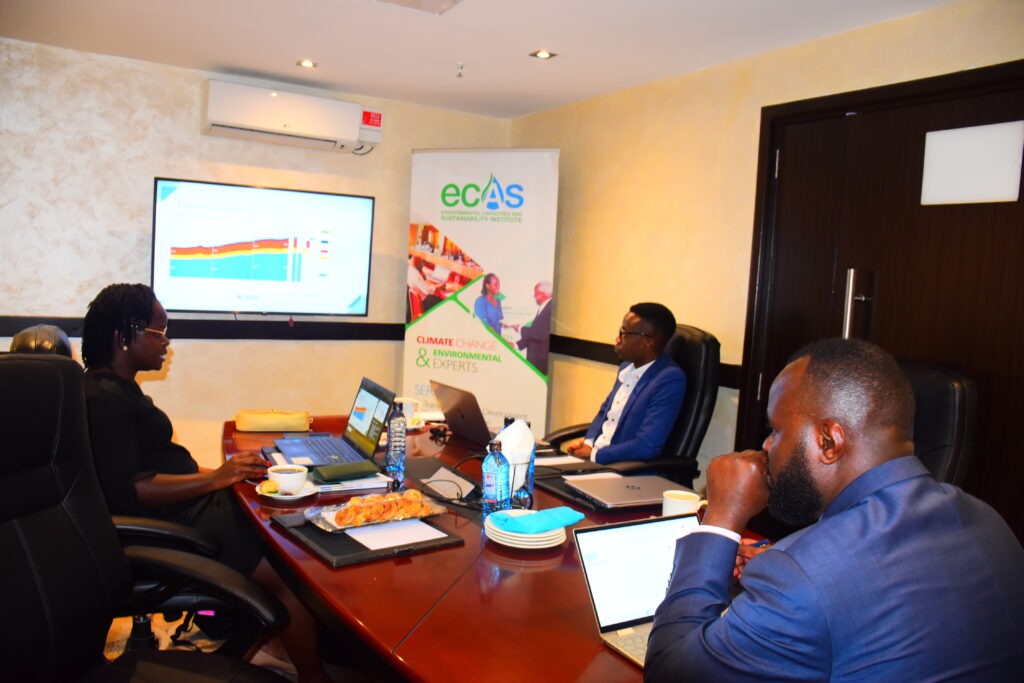
This course adopts a practical and interactive approach with expert-led lectures, real-world case studies, hands-on exercises, group discussions, role-playing, and practical assessment of EIA and EA reports. Guest lectures from regulators, legal experts, and industry leaders provide insights into compliance and enforcement challenges. Simulated assessments and audits allow participants to apply knowledge in real-life scenarios, with workshops on policy analysis and sustainability planning to develop actionable strategies.
General Notes
Training manuals and reference materials provided.Certificate issued upon successful completion.Tailor-made courses for organizations available: info@ecasiafrica.orgPayment should be sent before the start of training with proof sent to: info@ecasiafrica.orgAbout ECAS Institute
ECAS Institute delivers independent training, research, and consulting services in climate change, resilience building, carbon markets, renewable energy, nature-based solutions, biodiversity conservation, agriculture, and food systems. Based in Nairobi, Kenya, ECAS works across Africa and globally, supporting partners in the UK, Denmark, Italy, Sweden, Germany, and the USA.
Elevate your professional development journey with us. Talk to us!