International Training on Environmental Impact Assessment (EIA)
Background
Environmental Impact Assessment (EIA) is a critical tool for sustainable development, ensuring that potential environmental effects of proposed projects are identified, evaluated, and mitigated before implementation. The International Training on Environmental Impact Assessment (EIA) offered by ECAS Institute is designed to equip professionals with the knowledge, skills, and methodologies required to conduct effective EIAs in compliance with international and national regulations.
With increasing global concerns over environmental degradation, climate change, and resource depletion, EIAs have become a mandatory requirement in many countries for major infrastructure, industrial, and development projects. This training provides a structured approach to assessing environmental risks, evaluating project alternatives, and implementing mitigation measures to minimize negative impacts.
Objectives of the Training
Provide a comprehensive understanding of the Environmental Impact Assessment process and its role in sustainable development.Familiarize participants with international and national EIA laws, regulations, and policies.Equip learners with scientific techniques and methodologies for environmental impact assessment.Strengthen skills in stakeholder engagement, public consultation, and conflict resolution.Develop capacity to design mitigation measures, monitoring strategies, and adaptive management approaches.Guide participants in preparing and reviewing high-quality EIA reports.Introduce GIS and modern technological tools used in EIA processes.What You Will Learn
Principles, purpose, and legal frameworks governing Environmental Impact Assessment.EIA techniques such as screening, scoping, impact prediction, and mitigation planning.National and international EIA compliance requirements.The role of communities, government agencies, and stakeholders in EIA processes.Assessment of environmental, social, and economic impacts of development projects.Strategies for minimizing or offsetting negative environmental impacts.Preparation of Environmental Impact Statements (EIS) for project approval.Duration and Program
To Be Confirmed (TBC)
Target Participants
This International Training on Environmental Impact Assessment (EIA) is designed for professionals involved in environmental management, sustainable development, and regulatory compliance. It is particularly suitable for environmental officers, project managers, policymakers, consultants, and government regulators responsible for EIA processes.
The course is also ideal for professionals working in infrastructure, energy, mining, agriculture, and manufacturing sectors, as well as researchers, academicians, students, NGOs, community leaders, and advocacy groups engaged in environmental protection and public participation.
Training Modules
1. Introduction to Environmental Impact Assessment (EIA)
Definition, principles, and importance of EIA.History and evolution of EIA.Key components of the EIA process.2. EIA Legal and Policy Frameworks
International EIA treaties and conventions.National and regional EIA regulations.Institutional roles and enforcement mechanisms.Compliance and monitoring measures.3. The EIA Process and Methodologies
Screening, scoping, impact assessment, mitigation, and monitoring.Data collection and analytical techniques.Qualitative and quantitative impact prediction.Decision-making based on EIA findings.4. Public Participation and Stakeholder Engagement
Importance of public participation in EIA.Stakeholder identification and engagement strategies.Communication and conflict resolution techniques.Case studies on stakeholder engagement.5. Environmental Monitoring, Auditing, and Mitigation
Environmental monitoring programs.Post-EIA follow-up and compliance audits.Design and implementation of mitigation measures.6. EIA Report Writing and Review
Structure and organization of EIA reports.Best practices in EIA documentation.Common challenges and solutions.Practical report review exercises.7. Application of GIS and Technology in EIA
Introduction to GIS in environmental assessment.Remote sensing applications.Environmental data visualization and mapping.Hands-on GIS exercises.8. Case Studies and Practical Applications
EIA case studies from infrastructure, energy, mining, and agriculture sectors.Lessons learned from real-world projects.Group discussions, simulations, and problem-solving.Field visits (where applicable).9. Final Assessment and Certification
Final review and evaluation.Project presentations or written assessment.Certificate of completion.Training Style
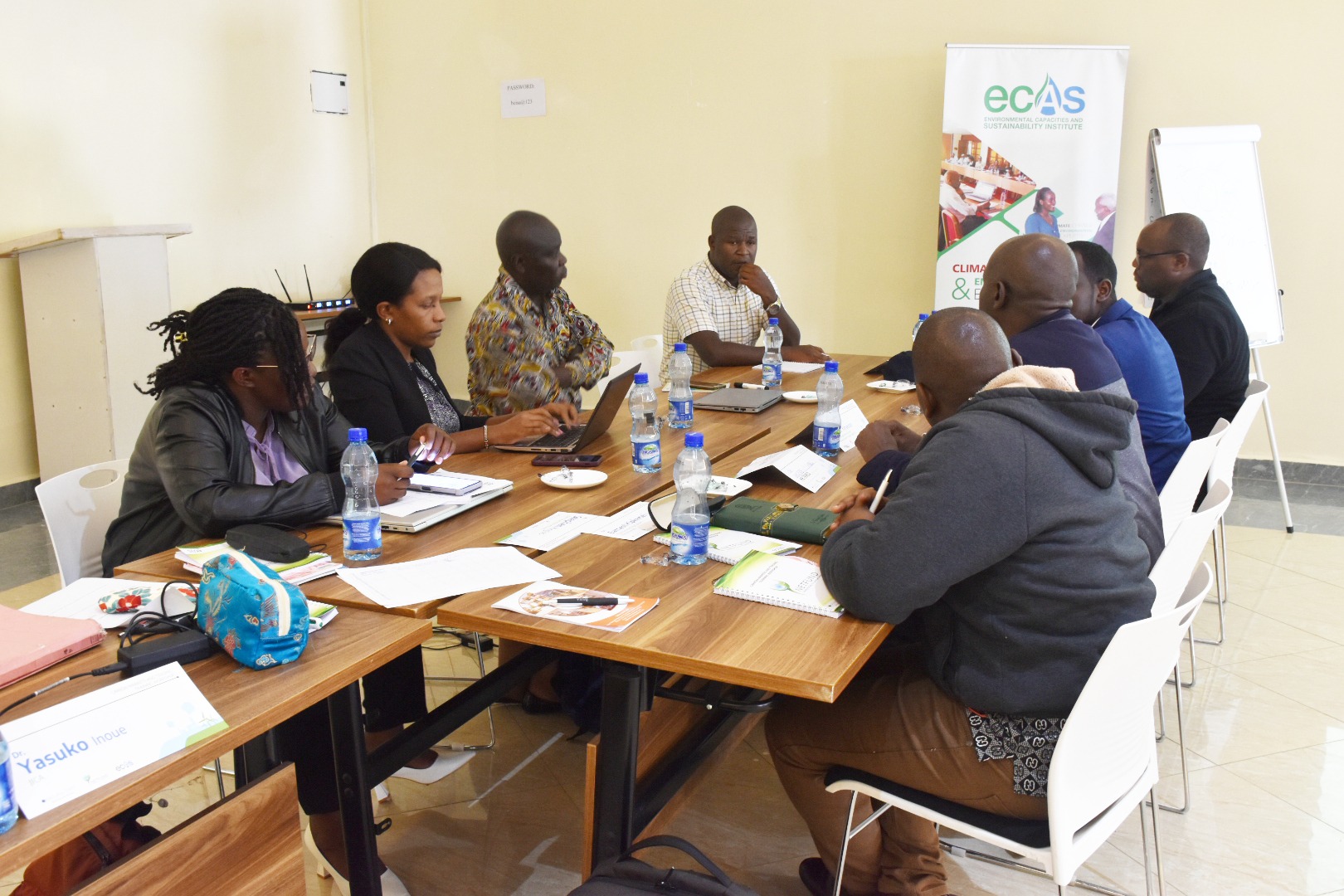
The training adopts an interactive and practical learning approach, combining expert lectures, case studies, group discussions, hands-on exercises, GIS applications, and stakeholder engagement simulations. Participants also gain experience in EIA report writing, peer review, and real-world environmental assessment practices.
General Notes
Training manuals and reference materials will be provided.Participants receive a certificate upon successful completion.Tailor-made training programs are available for organizations.For inquiries, contact: info@ecasiafrica.orgAbout ECAS Institute
ECAS Institute designs and delivers specialized training, research, and consulting services focused on climate change, resilience building, carbon markets, renewable energy, nature-based solutions, biodiversity conservation, agriculture, and food systems. Based in Nairobi, Kenya, ECAS Institute works across Africa and globally with partners in Europe and the United States.