ECAS Institute Training
Design and Monitor Nutrition-Sensitive Agriculture and Food Systems Programmes
Course Background
Malnutrition in all its forms remains a significant global challenge, despite substantial investments in agriculture and food systems. While there’s growing consensus on the critical role of agriculture in improving nutritional outcomes, many existing programs and policies often lack a deliberate “nutrition-sensitive” approach in their design, implementation, and monitoring. This results in missed opportunities to leverage agricultural development for enhanced health and well-being, leading to sub-optimal impact on vulnerable populations.
ECAS Institute has developed this e-learning course to equip professionals with practical, evidence-based skills to integrate nutrition into agriculture and food systems initiatives, maximizing impact on public health and food security.
Course Objectives
Understand and apply basic concepts of agriculture-to-nutrition impact pathways through practical examples.Formulate clear and measurable nutrition-sensitive objectives and outcomes for agriculture and food systems programmes.Effectively target nutritionally vulnerable populations and prioritize interventions based on needs.Define key elements of a robust implementation strategy, including capacity building and partnership development.Design an effective monitoring system to track progress and evaluate impact.Consider and accurately estimate the costing of nutrition-related elements within programme budgets.What You Will Learn
Foundational principles of how agriculture and food systems influence nutritional outcomes.Develop program objectives and outcomes that are nutrition-sensitive.Identify and prioritize interventions for vulnerable populations.Build a clear impact pathway linking activities to nutritional outcomes.Develop monitoring systems and evaluate program performance.Cost nutrition-specific program components accurately.Target Participants
Government staff (Agriculture, Health, Planning ministries)Regional and international organizationsNGO program managers and technical advisorsResearchers, academics, and students in food systems and nutritionDevelopment agency officers and technical specialistsPrivate sector professionals involved in food production and distributionTraining Modules
Module 1: Agriculture-to-Nutrition Impact Pathways
Key objectives:
Introduction to the linkages between agriculture, food systems, and nutrition.Understanding direct and indirect impact pathways.Key definitions and conceptual frameworks.Importance of a nutrition-sensitive approach.Module 2: Formulating Nutrition-Sensitive Objectives and Outcomes
Key objectives:
Principles of SMART objective setting in a nutrition context.Identifying relevant nutritional outcomes for agricultural interventions.Practical exercises in drafting objectives and outcomes.Module 3: Targeting Nutritionally Vulnerable Populations
Key objectives:
Methods for identifying nutritionally vulnerable groups (women of reproductive age, young children).Criteria for prioritizing interventions based on impact and feasibility.Case studies on effective targeting strategies.Module 4: Build Your Impact Pathway
Key objectives:
Develop a logical framework or theory of change.Map activities, outputs, outcomes, and impacts related to nutrition.Identify assumptions and risks in the impact pathway.Module 5: Define Your Implementation Strategy
Key objectives:
Assess and strengthen human and institutional capacities.Build effective partnerships (multi-sectoral, multi-stakeholder).Consider resource mobilization and sustainability.Module 6: Design a Monitoring System
Key objectives:
Identify key nutrition indicators.Develop a robust monitoring and evaluation (M&E) plan.Collect data and report for adaptive management.Module 7: Costing Nutrition-Related Elements
Key objectives:
Understand importance of costing nutrition interventions.Methods for estimating costs of nutrition-specific and nutrition-sensitive activities.Budgeting considerations for sustainable programming.Training Style & Notes
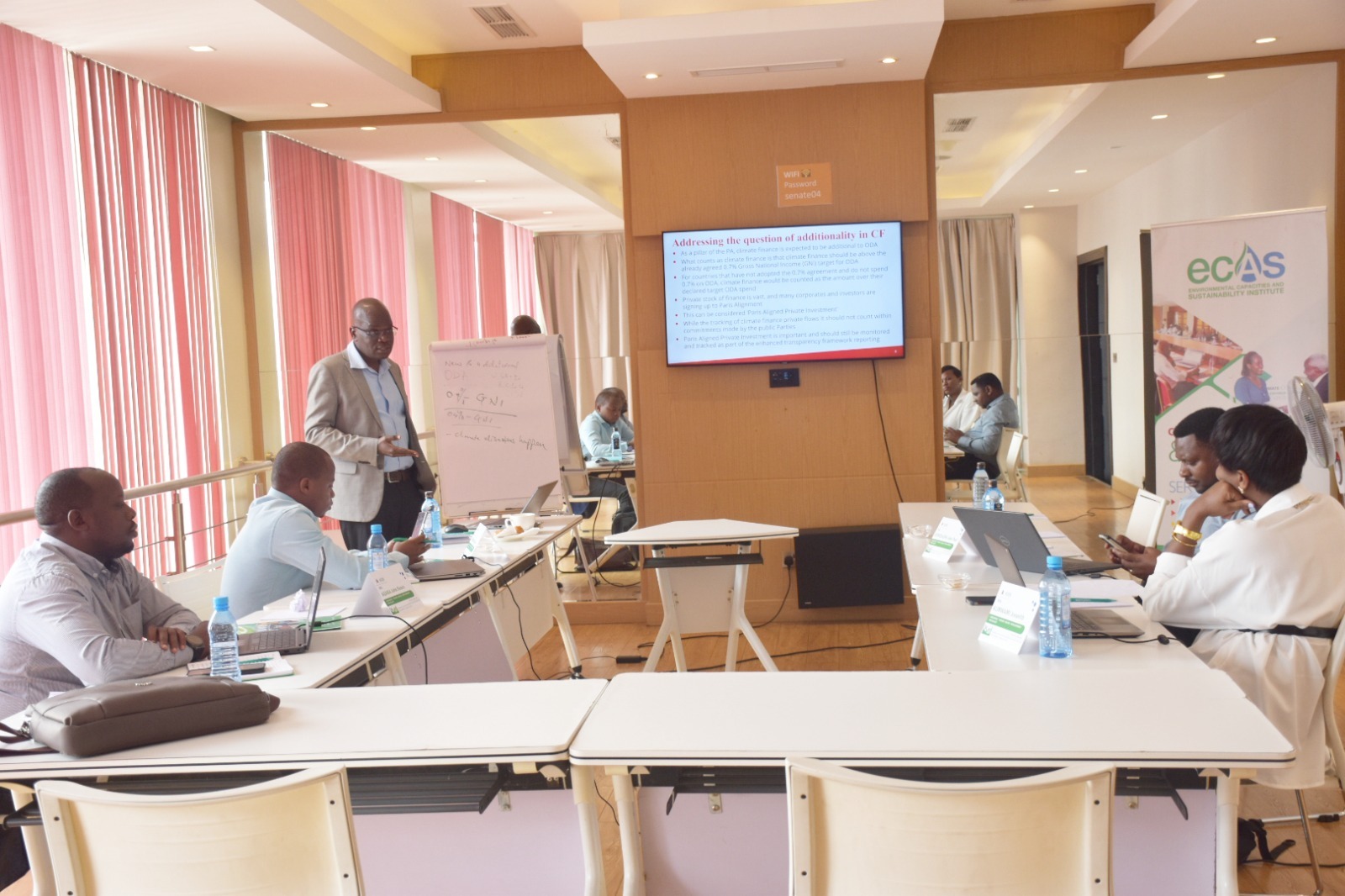
Modules include PowerPoint presentations, lectures, case studies/field visits, breakout sessions, and interactive discussions. Guest speakers, both in-person and online, provide real-world insights. Training manuals and reference materials are provided. Participants receive a certificate upon successful completion.
Contact: info@ecasiafrica.org
About ECAS Institute
The ECAS Institute delivers targeted training, research, and consulting services in climate change, resilience building, carbon markets, renewable energy, nature-based solutions, biodiversity conservation, agriculture, and food systems. Based in Nairobi, Kenya, ECAS works across Africa and supports partners globally.