International Training on Climate Change and Development
Course Background
Climate change poses critical challenges to global development, affecting economies, ecosystems, and human well-being. ECAS Institute’s “Climate Change and Development” course explores how climate change impacts sustainable development and how strategies, policies, and technologies can support low-carbon, climate-resilient growth.
Through theory, case studies, and practical exercises, participants learn to integrate climate considerations into national policies, sectoral strategies, and community initiatives. The course equips policymakers, development practitioners, and industry leaders with knowledge and skills for climate-smart development.
By completing this course, participants will be able to design and implement strategies that promote sustainable, resilient, and low-carbon development in a changing climate.
Course Objectives
Understand the relationship between climate change and sustainable development.Assess economic, social, and environmental consequences of climate change.Explore climate policies, international agreements, and governance structures.Examine mitigation strategies for low-carbon development.Assess adaptation strategies to build resilience in communities and sectors.Explore climate finance mechanisms supporting sustainable development.Highlight roles of private sector, civil society, and government in climate action.Apply practical tools for integrating climate change into development planning and policy-making.What You Will Learn
Foundations of climate science and development implications.Impact of climate change on economic growth, poverty reduction, and resource management.Key international climate agreements and governance structures.Mitigation strategies including renewable energy, energy efficiency, and emissions reduction.Climate adaptation, disaster risk reduction, and resilience-building practices.Climate finance mechanisms such as the Green Climate Fund and carbon markets.Mainstreaming climate considerations into national and local development policies.Global and regional case studies of successful climate action programs.Target Participants
Designed for policymakers, development practitioners, environmental planners, economists, researchers, and climate professionals in government, international organizations, NGOs, and private sector. Also suitable for professionals in finance, agriculture, infrastructure, and social sectors seeking to integrate climate resilience into their work.
Training Modules
| No | Module | Details |
|---|
| 1 | Understanding Climate Change and Development | Introduction to climate science, relationship with sustainable development, sector vulnerabilities, climate policies, SDGs integration. |
| 2 | Climate Change Governance and International Agreements | Climate governance overview, UNFCCC, Paris Agreement, NDCs, role of local governments, stakeholder engagement. |
| 3 | Mitigation Strategies for Low-Carbon Development | Renewable energy, energy efficiency, emission reductions in industry and transport, carbon pricing and markets, green business models. |
| 4 | Climate Adaptation and Resilience Building | Risk assessment, climate-smart agriculture, water management, disaster risk reduction, traditional knowledge and nature-based solutions. |
| 5 | Climate Finance and Investment for Development | Climate finance sources, Green Climate Fund, risk assessment for investments, public-private partnerships, developing bankable projects. |
| 6 | Private Sector Engagement in Climate and Development | Corporate climate responsibility, net-zero strategies, sustainable supply chains, green investment, ESG frameworks. |
| 7 | Integrating Climate Change into National and Sectoral Planning | Climate-sensitive infrastructure, mainstreaming policies, resilient transport, housing and industry, sustainable land use, multi-sectoral approaches. |
| 8 | Case Studies and Practical Applications | Best practices in mitigation and adaptation, global and regional lessons, policy success stories, developing climate action roadmap, future opportunities and challenges. |
Training Style
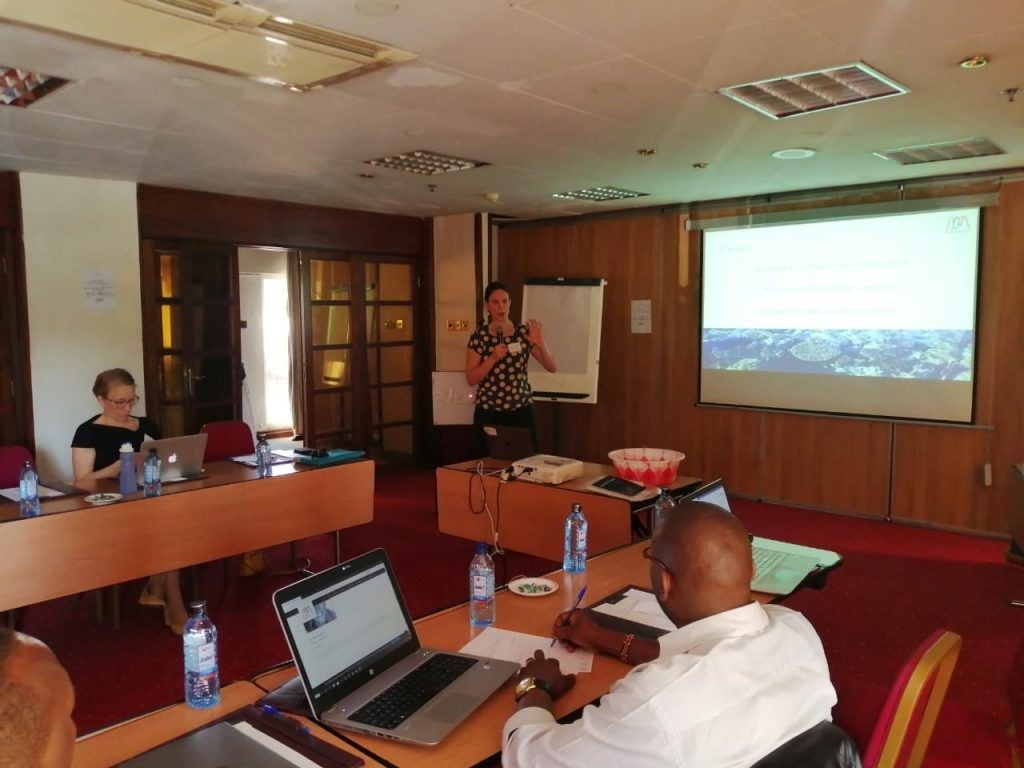
Participatory and experiential learning combining lectures, interactive discussions, case studies, hands-on exercises, group work, policy simulations, and problem-solving. Workshops, debates, networking with policymakers and climate finance experts. Digital tools, scenario analysis, and storytelling techniques enhance communication and advocacy skills.
General Notes
Training manuals and reference materials provided.Certificate issued upon completion.Tailor-made courses available for organizations.Payment before training; proof sent to info@ecasiafrica.org.Enhance your knowledge in climate-smart development and integrate climate action into sustainable development planning.
Contact ECAS Institute | info@ecasiafrica.org