International Training on Experience Capitalization for Continuous Learning
Course Background
In dynamic development and humanitarian contexts, valuable experiences are generated daily, but lessons often remain undocumented or unused. This leads to repeated challenges, inefficient resource use, and missed opportunities for innovation.
ECAS Institute provides this training to equip professionals with practical tools for Experience Capitalization (EC), a methodology for systematically capturing, analyzing, and sharing lessons to generate continuous learning and drive change. The course empowers participants to transform raw experiences into actionable knowledge for improved performance and sustainable development outcomes.
Course Objectives
Facilitate and strategically plan an experience capitalization process effectively.Implement the experience capitalization process step by step, from information gathering to knowledge sharing.Adopt, adapt, scale up, and mainstream experience capitalization within organizations to foster continuous learning and generate change.What You Will Learn
Foundational concepts and benefits of systematically capturing and learning from organizational experiences.Setting up and managing an experience capitalization process, including facilitation techniques.Step-by-step execution covering data collection, analysis, documentation, and knowledge sharing.Strategies to leverage lessons for real change, including scaling up successful practices and embedding EC into routines.Duration and Program
The course consists of 13 lessons grouped into 5 comprehensive units, each lasting 30–60 minutes. Detailed schedules, exercises, and collaborative activities will be shared prior to the training.
Target Participants
Team leaders and managers overseeing projects and teams.Project and programme technical staff involved in implementation and evaluation.Monitoring and evaluation officers assessing project performance and learning.Communication professionals disseminating project outcomes and lessons.Knowledge management professionals responsible for organizational learning and sharing strategies.Training Modules
| No | Unit / Module | Details |
|---|
| 1 | Unit 1 – Introduction | Foundational understanding of experience capitalization: why it matters and what it is. Lessons: 1.1 Why learn EC, 1.2 What is EC |
| 2 | Unit 2 – Facilitate | Focuses on facilitation skills to guide group analysis. Lessons: 2.1 Facilitate EC process, 2.2 Facilitation techniques and methods |
| 3 | Unit 3 – Prepare | Preparatory steps for EC: framing and planning the process. Lessons: 3.1 Frame EC process, 3.2 Plan EC process |
| 4 | Unit 4 – Implement | Core implementation: gathering, organizing, analyzing, documenting, and sharing knowledge. Lessons: 4.1 Gather info, 4.2 Analyze, 4.3 Document, 4.4 Share, 4.5 Communication products and channels |
| 5 | Unit 5 – Generate Change | Leveraging EC to drive organizational and sectoral change. Lessons: 5.1 Adopt, adapt, scale up, 5.2 Mainstream EC |
Training Style
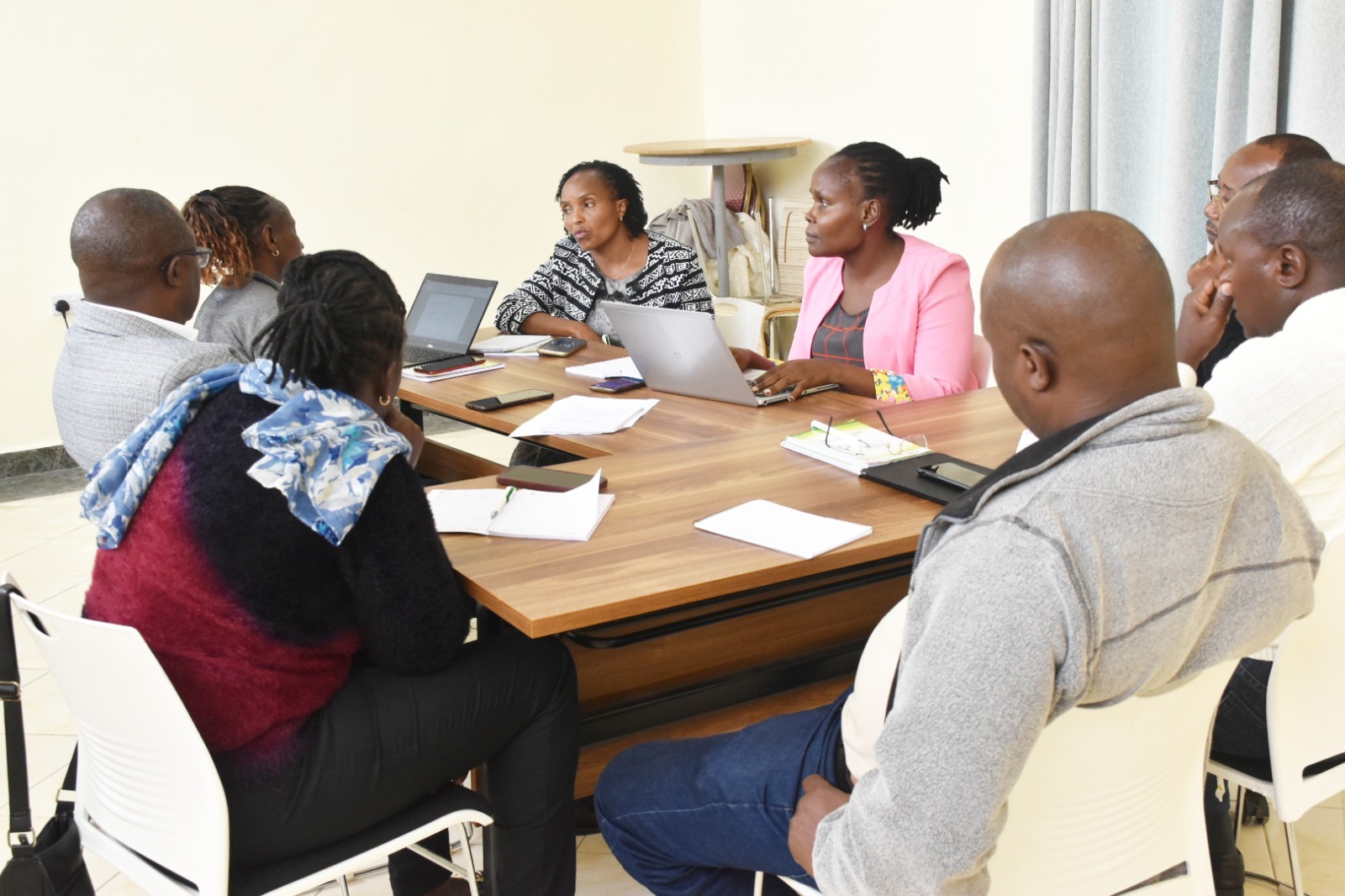
Modules are delivered through presentations, lectures, case studies, field visits, breakout sessions, and interactive discussions. Guest speakers (in-person or online) provide real-world insights. Faculty includes experienced decision-makers and practitioners.
General Notes
Training manuals and reference materials provided.Certificates awarded upon successful completion.Tailor-made courses available—contact info@ecasiafrica.org.Payment to ECAS bank account before training; proof emailed to info@ecasiafrica.org.About ECAS Institute
ECAS Institute delivers training, research, and consulting in climate change, resilience, carbon markets, renewable energy, biodiversity, agriculture, and food systems. Based in Nairobi, Kenya, ECAS works across Africa and globally, supporting partners in the UK, Denmark, Italy, Sweden, Germany, and USA.