International Training on Evaluation and Impact Assessment of Policies and Projects
Enhance your ability to evaluate policies and projects effectively, measure their impact, and provide actionable recommendations for sustainable development and evidence-based decision-making across Africa.
Course Objectives
Equip participants with knowledge of evaluation and impact assessment concepts, frameworks, and standards.Enhance skills in designing and applying qualitative and quantitative evaluation methodologies.Strengthen competencies in developing logic models and theories of change.Guide learners in the ethical and strategic use of evaluation findings for policy-making, accountability, and learning.What You Will Learn
Understanding evaluation types, designs, and tools in policy and project contexts.Collecting, analyzing, and interpreting both qualitative and quantitative data.Developing indicators, baseline studies, and performance tracking systems.Integrating evaluation into the full policy or project lifecycle.Communicating findings effectively to maximize influence on stakeholders.Target Participants
This course is designed for government officials, policy analysts, M&E specialists, program and project managers, development practitioners, consultants, researchers, academics, and graduate students who wish to enhance their skills in policy and project evaluation within real-world development contexts.
Training Style
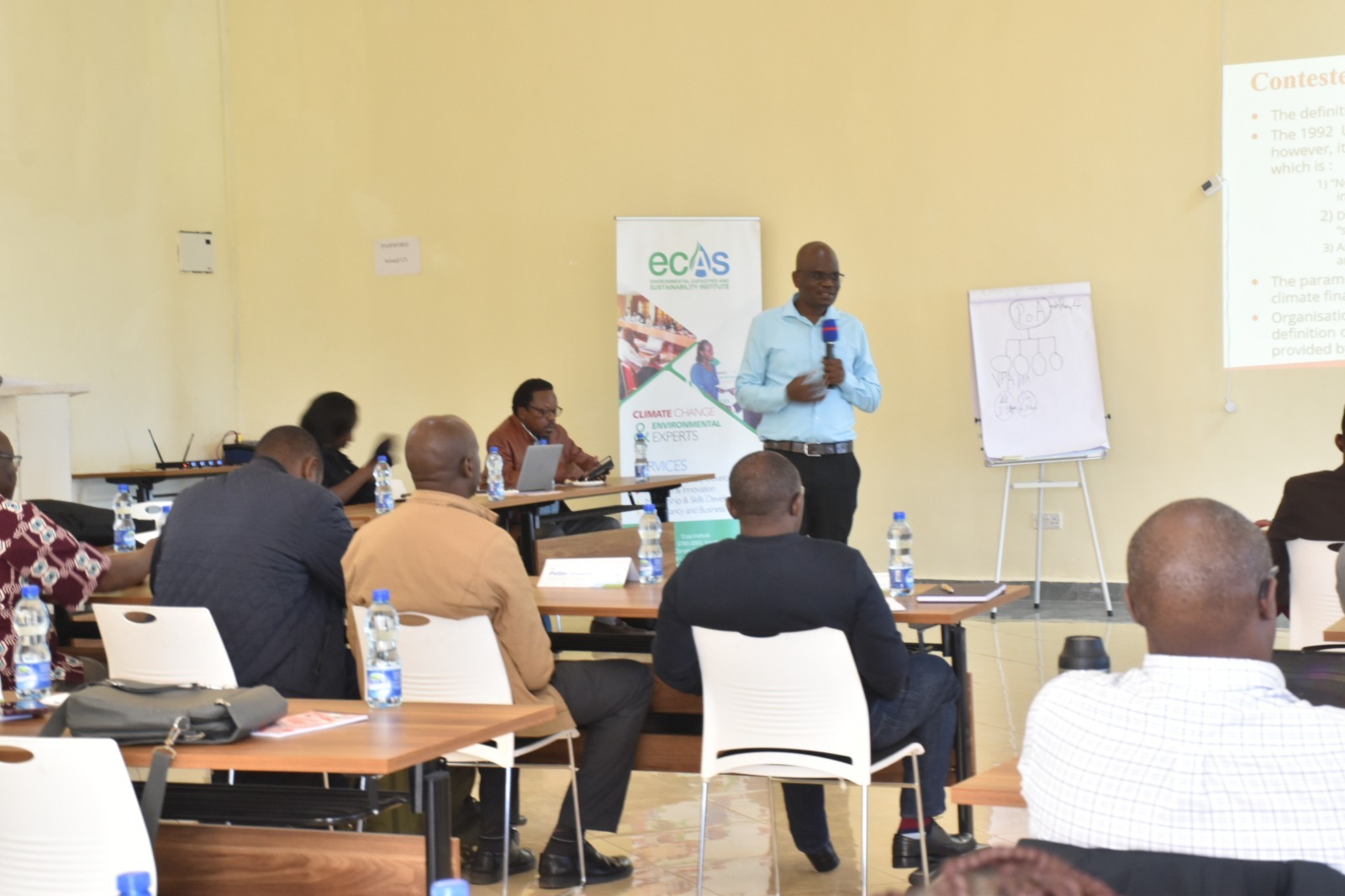
Interactive lectures, PowerPoint presentations, case studies, field visits, breakout sessions, and guest speakers (online and in-person). Emphasis on hands-on application, discussion, and contextual learning tailored to the African development landscape.
Training Modules
| No | Module | Details |
|---|
| 1 | Foundations of Evaluation and Impact Assessment | Key concepts, purposes, principles, types of evaluations, ethical considerations, and MEIA in climate, sustainability, and resilience contexts. |
| 2 | Designing Effective Evaluation Frameworks | Logical Framework Approach, Theory of Change, SMART indicators, evaluation planning tools, risk and assumptions mapping. |
| 3 | Data Collection and Management | Quantitative and qualitative methods, sampling, participatory techniques, data ethics, digital tools like KoboToolbox and ODK. |
| 4 | Environmental and Social Impact Assessment (ESIA) | ESIA principles, legal frameworks, scoping, baseline studies, impact prediction, mitigation, stakeholder engagement, environmental management plans. |
| 5 | Data Analysis and Interpretation | Descriptive and inferential statistics, software use (SPSS, Excel, R, NVivo), triangulation, cost-benefit and cost-effectiveness analysis, attribution vs. contribution. |
| 6 | Communicating Evaluation Findings | Report writing, data visualization, policy briefs, presentations to stakeholders, advocacy, and reform strategies. |
| 7 | Practical Case Study & Field Simulation | Team-based evaluation of a real or hypothetical project, applying LogFrame and ToC, field visits or virtual reviews, presentations, peer review, reflection, and feedback. |
General Notes
Training manuals and additional reference materials are provided.Participants will receive a certificate upon successful completion.Tailor-made courses for organizations are available. Contact: info@ecasiafrica.orgPayment must be sent prior to training with proof submitted to the above email. Enroll Now