Sustainability of Social-Ecological Systems
International Training on the Water-Energy-Food Nexus | ECAS Institute
Overview
Objectives
Modules
Target Participants
Enroll
Course Background
This course explores the Water-Energy-Food (WEF) Nexus, focusing on integrated strategies for sustainable management of interconnected resources. Participants will gain a multi-disciplinary perspective, understanding the impact of climate change, resource depletion, and population growth on WEF security. Through scientific research, policy analysis, and real-world case studies, the course equips professionals to develop strategies that enhance resource efficiency, resilience, and long-term sustainability.
Course Objectives
Understand the interconnections between water, energy, and food systems for sustainability.Analyze climate change, resource depletion, and population growth impacts on WEF security.Evaluate policy frameworks, governance approaches, and institutional roles.Develop integrated resource management strategies considering environmental, economic, and social dimensions.Explore technological innovations and sustainable practices for WEF security.Assess international cooperation, transboundary resource management, and global policies.Identify business and investment opportunities promoting sustainability in the WEF Nexus.Apply systems-thinking approaches to solve complex sustainability challenges.Training Modules
Introduction to the WEF Nexus: Interconnections, global perspectives, and resource security.Climate Change and Resource Scarcity: Impacts, adaptation, and mitigation strategies.Water Resource Management: Governance, sustainable use, conservation technologies.Energy for Sustainable Development: Renewable energy, energy efficiency, and smart systems.Food Security and Sustainable Agriculture: Climate-smart agriculture, precision farming, and supply chain efficiency.Policy & Governance: National/international policies, cross-sector collaboration, institutional roles.Case Studies & Best Practices: WEF Nexus approaches, transboundary management, lessons learned.Innovative Solutions & Future Trends: Emerging technologies, circular economy models, investment opportunities.Practical Applications & Capstone Project: Systems-thinking strategies and actionable sustainability plans.Target Participants
Professionals, policymakers, researchers, and sustainability advocates in water, energy, and food sectors.Government officials, corporate leaders, NGO representatives, and academics.Urban planners, climate specialists, investment analysts, and business leaders.Public or private sector participants seeking practical tools for integrated resource management.Enrollment & Notes
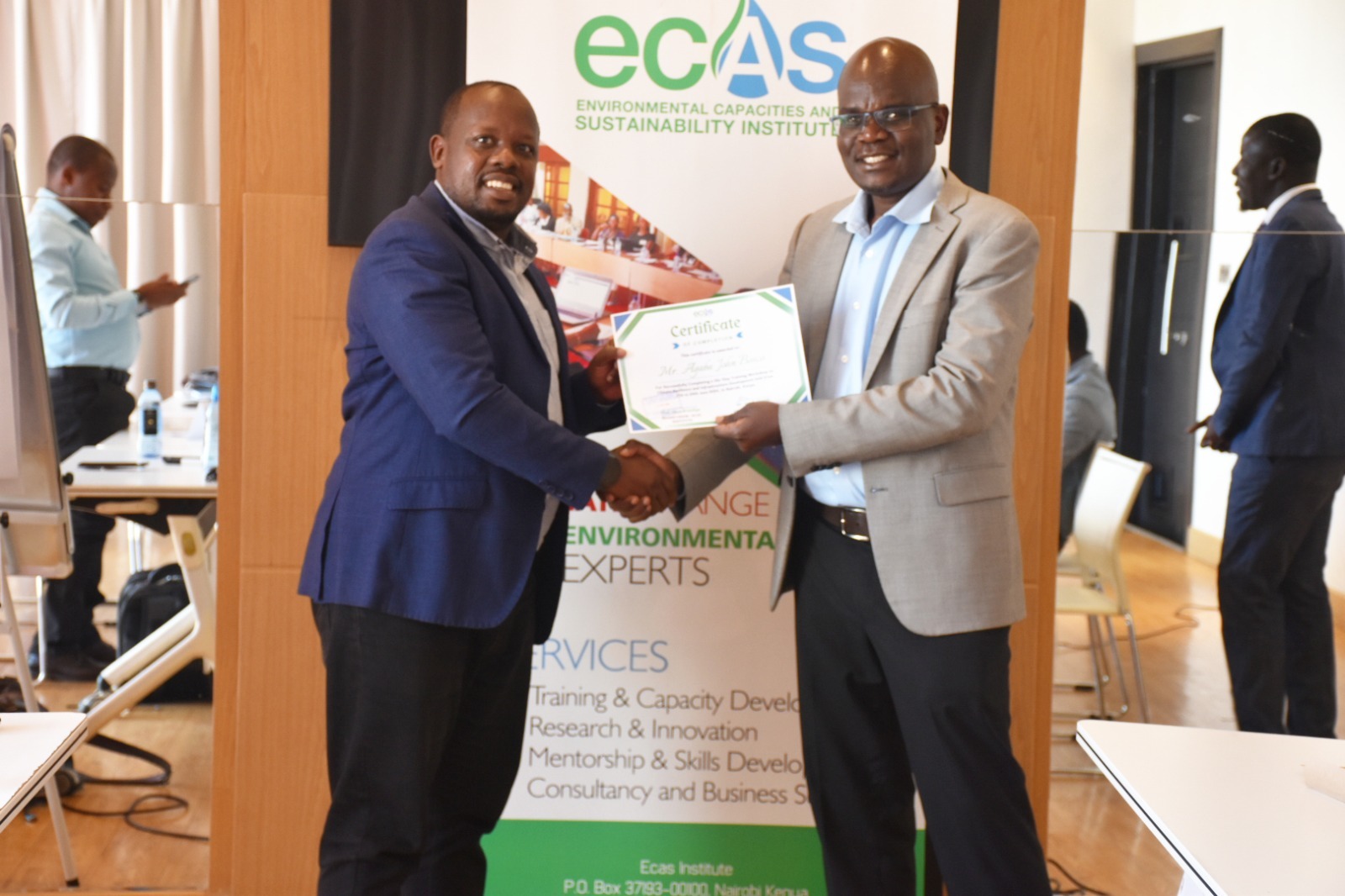
Training manuals and reference materials are provided. Participants receive a certificate upon successful completion. Tailor-made courses for organizations are available.
Payment should be sent to our bank account before the start of training, with proof of payment sent to info@ecasiafrica.org.
Contact us for enrollment, fees, and detailed program information.