International Training on Global Warming: Mitigation and Modeling of Climate Change
Course Background
Global warming is a pressing global challenge caused by human-induced greenhouse gas (GHG) emissions. Understanding the science of climate change, mitigation strategies, and modeling is essential for policymakers, researchers, and professionals to reduce environmental impacts and enhance resilience.
ECAS Institute offers this course to provide participants with a comprehensive understanding of climate science, climate modeling techniques, and mitigation strategies. The training covers climate projections, carbon reduction policies, renewable energy solutions, and adaptation planning.
Through interactive discussions, case studies, and hands-on modeling exercises, participants gain analytical and practical tools to contribute effectively to climate action.
By the end of this course, participants will be equipped to analyze climate scenarios, implement mitigation strategies, and make informed decisions for sustainable climate action.
Course Objectives
Understand the science behind global warming, GHG emissions, and climate feedback mechanisms.Examine climate mitigation strategies including carbon pricing, renewable energy, and energy efficiency.Analyze climate models and projections to assess future climate scenarios.Explore international agreements such as the Paris Agreement and the UN SDGs.Develop skills in climate modeling and scenario analysis.Evaluate carbon reduction initiatives at local, national, and global scales.Understand the roles of businesses, governments, and civil society in mitigation.Learn about climate finance for sustainable energy and resilience projects.What You Will Learn
Fundamentals of global warming, climate science, and indicators.Climate modeling techniques for policy and decision-making.GHG mitigation strategies across sectors: energy, transport, industry, agriculture.Climate policy frameworks and international agreements.Carbon markets, emissions trading, and climate finance mechanisms.Technological innovations in mitigation: carbon capture, renewables.Case studies on successful mitigation projects.Hands-on exercises with climate modeling tools and emissions planning.Target Participants
This course is for climate scientists, environmental policymakers, energy professionals, sustainability officers, urban planners, and researchers. It is also suited for government officials, business leaders, financial experts, students, and academics seeking in-depth knowledge in climate modeling, mitigation, and sustainable policy planning.
Training Modules
| No | Module | Details |
|---|
| 1 | Science of Global Warming and Climate Change | Understanding GHGs, human impacts, the carbon cycle, climate evidence, and projections. |
| 2 | Climate Change Mitigation Strategies | Carbon reduction approaches, renewable energy, sustainable urban planning, policy frameworks, case studies. |
| 3 | Climate Modeling and Future Projections | Introduction to modeling, AI and big data in simulations, uncertainties, regional vs. global projections, policy applications. |
| 4 | Role of Businesses and Industries in Climate Mitigation | Corporate carbon neutrality, green supply chains, emissions trading, industry case studies, net-zero challenges. |
| 5 | Climate Policy and International Agreements | Paris Agreement, NDCs, UN/IPCC roles, climate finance mechanisms, policy implementation case studies. |
| 6 | Renewable Energy Transition and Climate Action | Transition from fossil fuels, innovations in solar, wind, bioenergy, energy storage, nuclear energy, challenges and opportunities. |
| 7 | Carbon Capture and Geoengineering Technologies | Carbon capture science, geoengineering solutions, direct air capture, ocean-based sequestration, ethical considerations. |
| 8 | Community-Based Climate Adaptation and Mitigation | Local government action, grassroots sustainability, adaptation in agriculture, sustainable land use, community-led case studies. |
Training Style
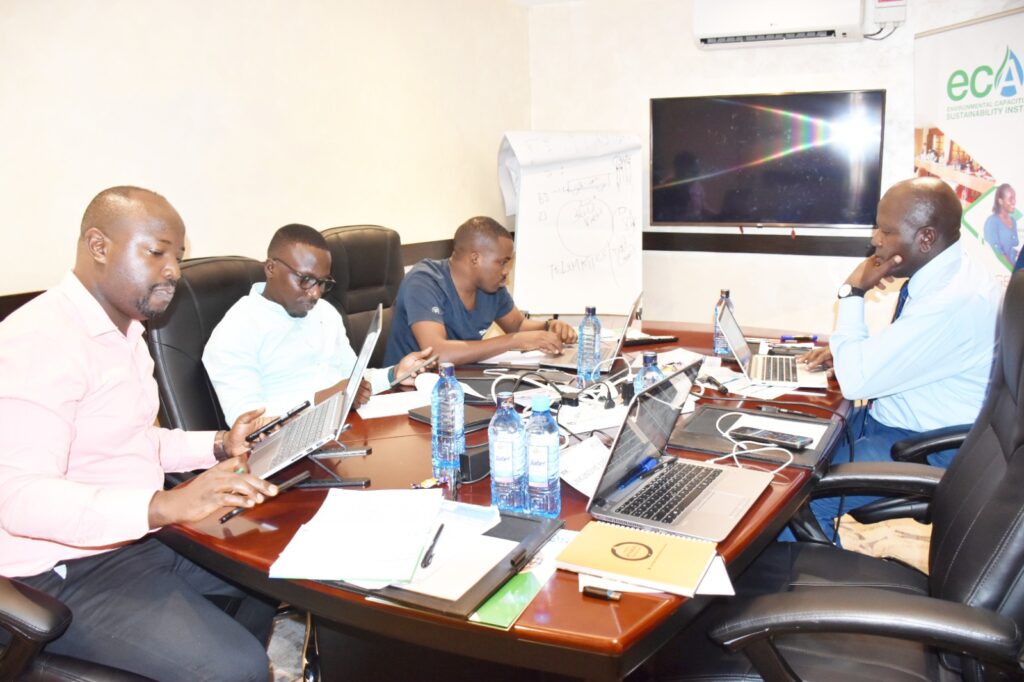
Interactive, applied learning combining lectures, data-driven discussions, and modeling exercises. Participants engage in climate simulations, emissions reduction scenario planning, workshops with real-world data, policy analysis, case studies, and guest expert sessions. The training equips participants with theoretical knowledge and practical tools for effective climate action.
General Notes
Training manuals and reference materials provided.Certificate issued upon completion.Tailor-made courses available. Contact info@ecasiafrica.org.Payment before training; proof sent to info@ecasiafrica.org.Enhance your capacity to analyze, model, and mitigate climate change through practical training and expert insights.
Contact ECAS Institute | info@ecasiafrica.org
About ECAS Institute
ECAS Institute delivers targeted training, research, and consulting in climate change, resilience building, carbon markets, renewable energy, nature-based solutions, biodiversity conservation, agriculture, and food systems. Based in Nairobi, Kenya, ECAS works across Africa and globally, supporting partners in the UK, Denmark, Italy, Sweden, Germany, and the USA.