Climate Finance: Budget Coding, Tracking and Reporting
Background
African countries, as parties to the UNFCCC, Kyoto Protocol, and Paris Agreement, have taken significant steps to integrate climate change considerations into policies, strategies, programs, and legislation. These efforts aim to mobilize, track, and report climate finance while promoting low-carbon, climate-resilient development aligned with Africa’s Agenda 2063 goals.
Climate finance plays a key role in enabling adaptation and mitigation actions, leveraging public and private resources to implement national climate priorities. Proper mechanisms, including planning, budgeting, coding, and reporting, are essential to ensure efficient use of climate finance. This training equips participants with practical skills for managing climate finance effectively in public and private sectors.
The course emphasizes climate finance planning, budgeting, coding, tracking, and reporting, using the Standard Chart of Accounts (SCOA) and Integrated Financial Management Information System (IFMIS) to ensure accountability and transparency in climate-related expenditures.
Training Objective
The training aims to improve the capacity of state and non-state actors to mobilize, manage, track, and report climate finance. Participants will gain knowledge of climate change, climate finance history, governance structures, sector-level budgeting, costing, coding, and tracking in line with national financial management systems.
Duration and Program
The training is a 7-day workshop, including a field visit to the National Treasury.
Target Participants and Fees
The training is suitable for participants from government, private sector, NGOs, academia, and communities. The course fee is USD 2000, covering tuition, training materials, lunch, venue, field trip, and certificate.
Training Style
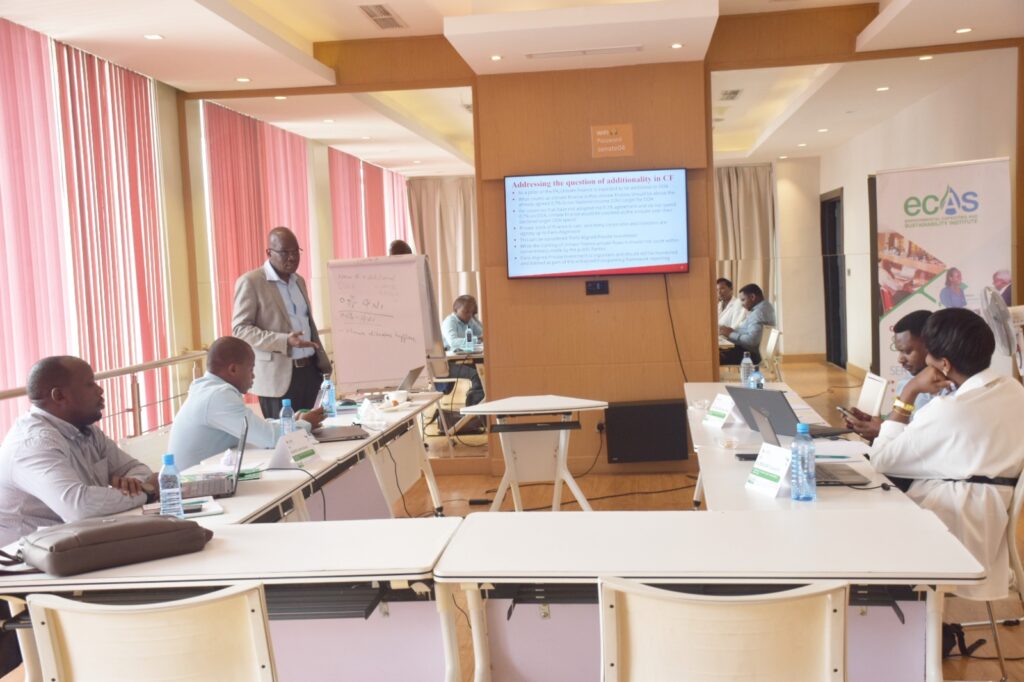
The course combines lectures, PowerPoint presentations, case studies, breakout sessions, field visits, and interactive discussions. Guest speakers (in-person and online) will provide real-world insights. The faculty consists of experienced decision-makers, practitioners, and representatives from research and educational institutions. Facilitators will balance theoretical presentations with group discussions and practical exercises.
Training Modules
| No | Module | Details |
|---|
| 1 | Introduction to Climate Change | Basics of climate change, key terminology, causes, impacts, and practical mitigation and adaptation measures. |
| 2 | Climate Financing | Historical background, sources, channels, access mechanisms, and governance structures of climate finance in Africa. |
| 3 | Climate Budgeting and Costing | Introduction to climate budgeting and costing, aligning public funds to climate actions, mainstreaming climate finance, and estimating costs of adaptation and mitigation projects. |
| 4 | Coding and Tracking | Using climate finance codes within SCOA and IFMIS, procedures for tracking climate-relevant expenditures, and reporting for both government and non-state actors. |
General Notes
- Training manuals and reference materials provided
- Certificate issued upon successful completion
- Tailor-made courses available for organizations
- Payment should be sent to the bank before training; proof sent to info@ecasiafrica.org
Enhance your capacity in climate finance planning, coding, tracking, and reporting for national and sectoral programs.
Contact ECAS Institute | info@ecasiafrica.org
About ECAS Institute
ECAS Institute delivers targeted training, research, and consulting in climate change, resilience building, carbon markets, renewable energy, nature-based solutions, biodiversity conservation, agriculture, and food systems. Based in Nairobi, Kenya, ECAS works across Africa and globally, supporting partners from the UK, Denmark, Italy, Sweden, Germany, and the USA.