International Training on Climate-Smart Forestry
Course Background
Forests and trees are critical for climate-smart agriculture (CSA), food security, and ecosystem health. Climate change impacts forests, and how we manage them affects our ability to adapt and reduce emissions. This course explores the role of forests and trees in climate-smart forestry, covering technical aspects, interventions, monitoring, and supportive environments.
The training is designed for policymakers, practitioners, and specialists to enhance expertise in climate-smart forest management, contributing to resilient forests and a healthier global climate.
Objectives of the Training
Explain concepts of sustainable forest management in the context of climate change.Identify interventions for climate-smart forestry in livelihoods, food security, resilience, and addressing deforestation and degradation.Describe steps to integrate climate-smart forestry into forest management unit plans.Understand forest monitoring and national forest monitoring systems.Identify elements to create an enabling environment for climate-smart forestry adoption.What You Will Learn
Participants will gain technical knowledge and practical guidance on:
Relevant concepts of sustainable forest management.Areas of intervention: livelihoods, food security, vulnerability, resilience, deforestation, and forest degradation.Steps to integrate climate-smart forestry approaches into forest management.Role of forest monitoring and national monitoring systems.Elements to create an enabling environment for adoption and scaling of practices.Duration and Program
This is a structured training course composed of four lessons, combining expert instruction, case studies, and practical considerations relevant to climate-smart forestry.
Target Participants
This course is designed for:
Policy-makersDevelopment practitioners and programme managersSectoral specialists and academicsTrainers and extension agentsTraining Modules
Introduction to Climate-Smart Forestry
Relationship between forests, trees, and climate changeDefining climate-smart forestry and core objectives (mitigation, adaptation, food security/livelihoods)Importance of forests for ecosystem services and goodsElements of Climate-Smart Forestry
Forests and trees for livelihoods and food securityBuilding resilience of forest ecosystems and communitiesAddressing deforestation and forest degradationExploring synergies and trade-offs in managementClimate-Smart Forestry in Practice
Integrating climate-smart considerations into forest management plansSpecific forestry practices: adaptive silviculture, diversified tree species, integrated landscape managementForest monitoring and national monitoring systemsCreating an Enabling Environment
Policy and governance frameworks supporting climate-smart forestryFinancing and investment opportunitiesCapacity building, knowledge sharing, and technology innovationStakeholder collaboration and participatory approachesTraining Style
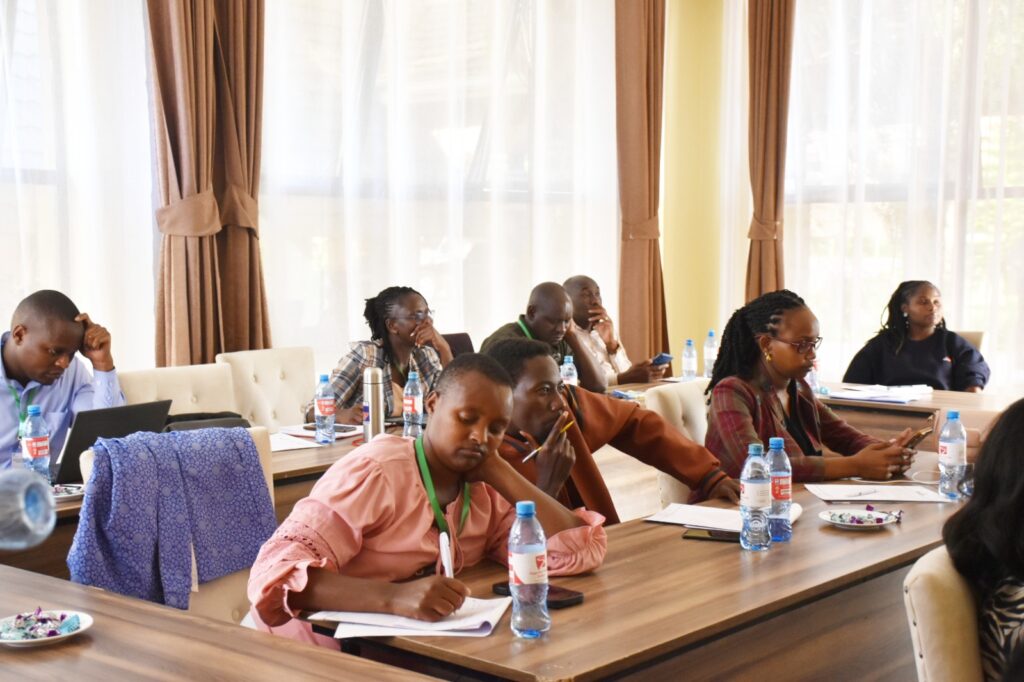
The course uses PowerPoint presentations, lectures, case studies, field visits, breakout sessions, and guest speakers (in-person and online). Experienced practitioners, decision-makers, and researchers provide practical insights. Interactive discussions, group work, and plenary engagements complement theoretical learning.
General Notes
Training manuals and reference materials provided.Certificate issued upon successful completion.Tailor-made courses can be designed for organizations: info@ecasiafrica.orgPayment must be sent to ECAS Institute bank account prior to training; proof of payment to: info@ecasiafrica.orgAbout ECAS Institute
ECAS Institute provides targeted training, research, and consulting services in climate change, resilience, carbon markets, renewable energy, nature-based solutions, biodiversity, agriculture, and food systems. Located in Nairobi, Kenya, ECAS works across Africa and internationally, supporting partners in the UK, Denmark, Italy, Sweden, Germany, and the USA.