Green Trade and Inclusive Green Economy
Course Overview
Course Background
World trade patterns show that while many developing countries are playing an increasing role in trade,
least developed countries—accounting for less than 1% of global trade—remain marginalized. These countries,
often reliant on natural resource-based exports, are highly vulnerable to economic and environmental shocks.
The transition to an inclusive green economy presents significant opportunities. By harnessing global demand
for environmental goods and sustainable products, countries can diversify their economies, reduce commodity
dependence, boost competitiveness, and promote long-term sustainable development. Trade can also help
drive a green economic recovery post-COVID-19, with rising demand for climate-friendly solutions.
This course equips participants from government, business, and civil society with knowledge and skills
to take advantage of green trade opportunities, exploring practical approaches for fostering sustainable
economic growth.
Learning Outcomes
Participants completing this course will be able to:
Outline the evolution of legal and governance frameworks linking trade and the green economy.Identify challenges and opportunities related to trade in the green economy transition.Describe enabling policy conditions for fostering green trade practices.Highlight sectoral case studies showcasing green trade in action.Course Structure
This course provides a clear understanding of the policy instruments and enabling conditions needed to advance the green economy through trade. It comprises four lessons, each approximately 20 minutes long:
The trade and environment interfacePerceived tensions and synergies between trade liberalisation and the green economyEnabling conditions and policy design for green tradeSeizing sectoral opportunitiesCertification
Participants will complete a final quiz of ten multiple-choice questions to assess learning outcomes.
The quiz can be attempted up to three times, and a passing score of 70% is required.
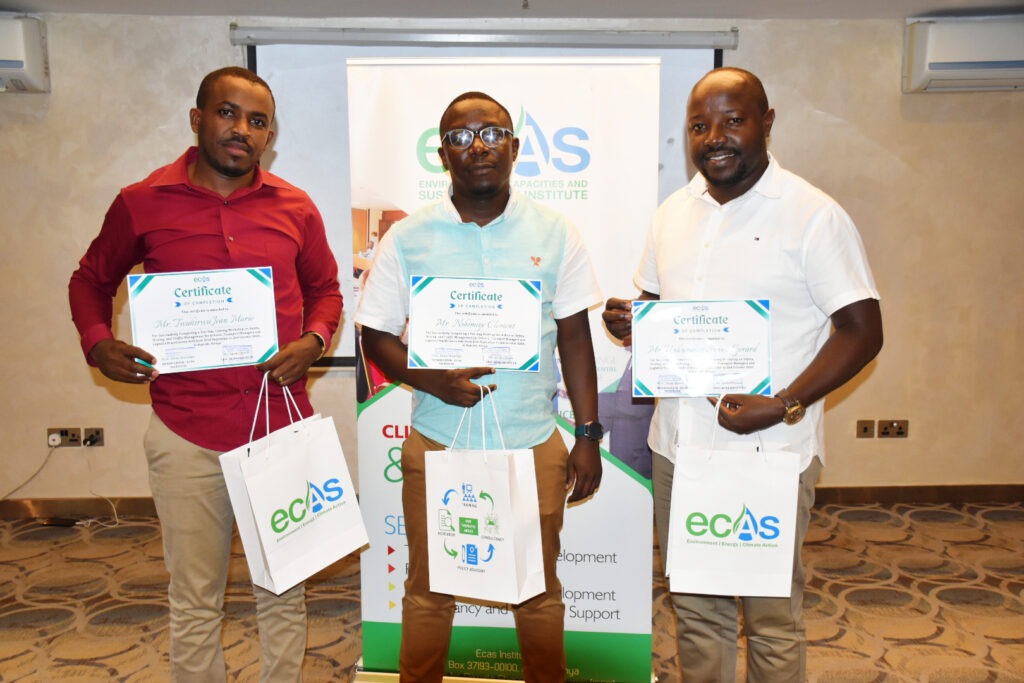
A Certificate of Completion will be available for download upon passing the quiz.
Partners
This course is developed under the Partnership for Action on Green Economy (PAGE),
bringing together five UN agencies: UN Environment, International Labour Organization, UN Development
Programme, UN Industrial Development Organization, and UN Institute for Training and Research. PAGE
provides integrated, holistic support to countries advancing inclusive green economy initiatives.
Contact & Registration
For more information or customized learning solutions, contact:
info@ecasiafrica.org